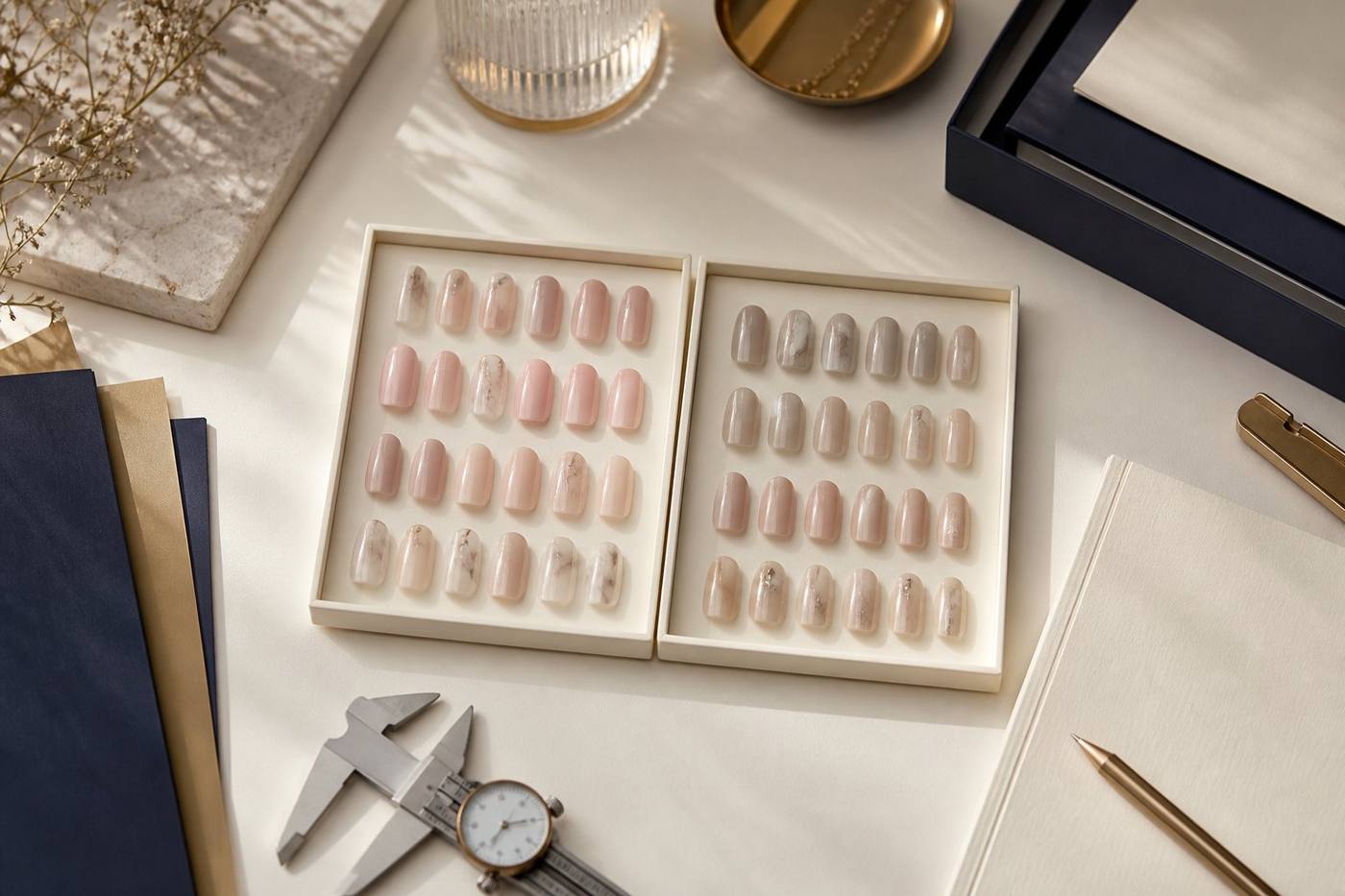
OEM and ODM are useful labels, but neither tells a brand what is actually being changed. The practical difference is how much of the product brief is already decided before sampling begins.
Step 01
ODM starts with an existing platform
An ODM route usually begins with existing tip shapes, set formats, finishes or packaging structures. A brand may select, adapt and brand those options. It can be useful for a first test because it reduces unknowns, but the brand should still confirm the exact set contents, fit, finish and packaging before approving a sample.
Step 02
OEM requires a clearer brief
An OEM project generally asks a supplier to make to the brand's specification. That may involve custom artwork, a new colour direction, a different set configuration or bespoke packaging. The label itself is less important than the written brief: identify what is existing, what is being changed and what needs a sample decision.
Step 03
Compare development work, not just unit price
A lower unit price may exclude artwork preparation, tooling, packaging development or additional sample rounds. Ask each supplier to separate product, accessories, packaging, sample work and any one-off development costs so the commercial comparison is honest.
Step 04
Keep approvals specific
A product sample approval does not automatically approve packaging, colour matching or all future production details. Keep a short record of what was approved, what is still open and which reference is the source of truth.
TRESTRONG coordinates supplier and sample conversations; it does not claim to be the producing factory.
Frequently asked questions
Questions to resolve before the next sample.
What's the practical difference between ODM and OEM for press-on nails?
An ODM route usually starts from an existing tip shape, set format, finish or packaging structure that a brand selects and adapts, while OEM generally asks a supplier to produce to the brand's own specification.
Does a lower unit price mean a lower total OEM or ODM cost?
Not necessarily. A lower unit price may exclude artwork preparation, tooling, packaging development or additional sample rounds, so ask suppliers to separate product, accessories, packaging, sample work and development costs.
Does approving a product sample also approve the packaging and colour?
No. A product sample approval doesn't automatically cover packaging, colour matching or every future production detail, so keep a short record of what's approved, what's still open and which reference is the source of truth.