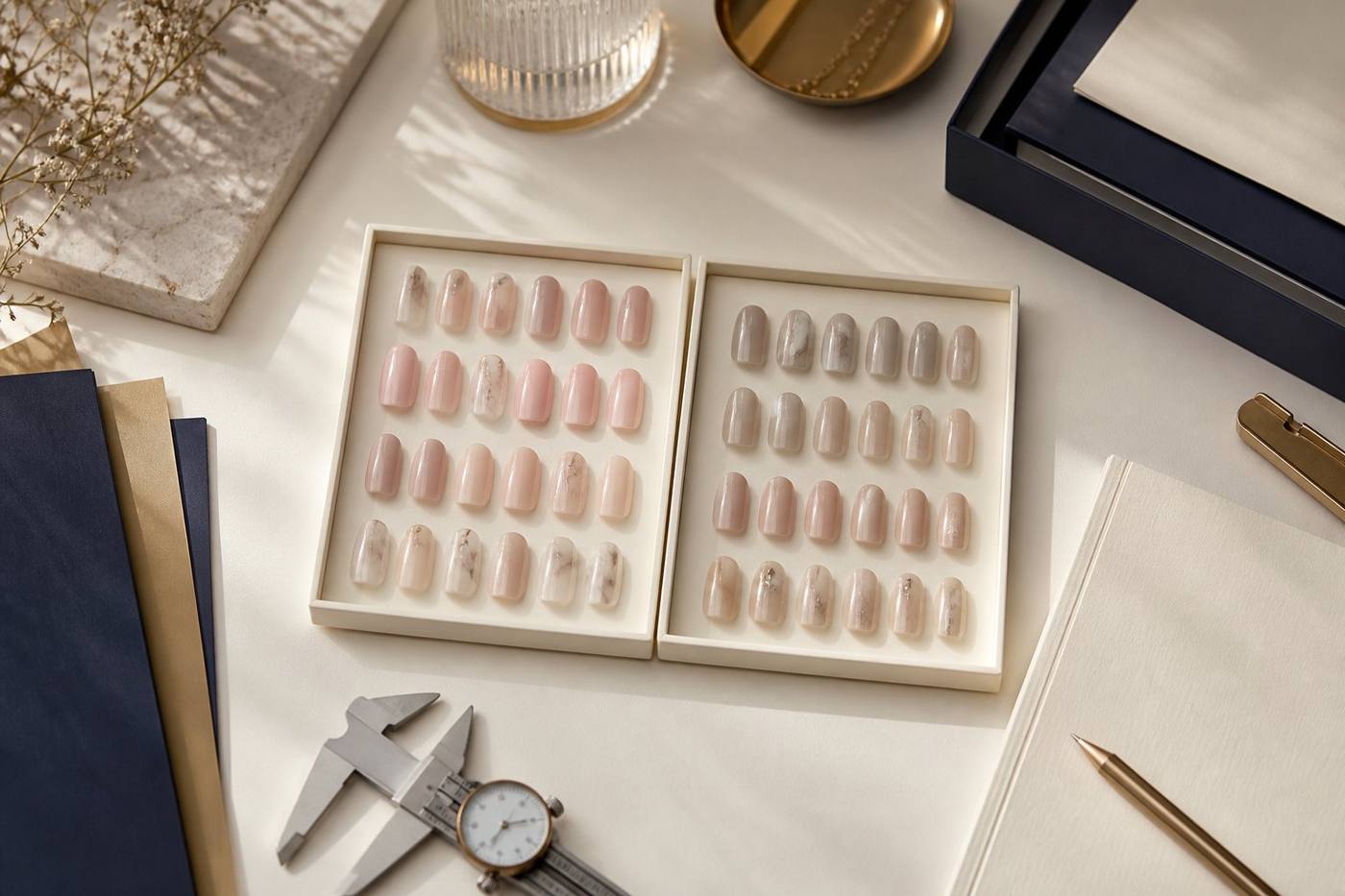
A sizing kit is not simply a bag of numbered tips. It is a way to help a customer understand fit, submit useful information and make a better first order decision.
Step 01
Match the kit to the actual collection
Sizing can vary by shape, length and profile. If a customer will order different product families, state which sizing kit applies to which family instead of assuming one chart covers every tip.
Step 02
Show measurements as well as labels
Numbered tips can be useful internally, but millimetre widths help a customer understand the actual range. Keep the chart readable and explain the order in which sizes should be recorded for each hand.
Step 03
Give calm, specific instructions
Show where the tip should sit at the cuticle and sidewalls, and explain that the aim is coverage without force. Avoid telling every customer to size down or size up; the right choice can depend on their nail bed and the product profile.
Step 04
Make submission easy
Provide one consistent format for customers to send their left and right sizes. A simple form, card or order-note structure reduces transcription errors and makes repeat ordering easier.
Step 05
Use feedback to improve the system
Tag customer questions about overhang, pressure, lifting or gaps. This can reveal unclear guidance, incomplete range coverage or an image that is teaching the wrong expectation.
Sizing information supports product selection but cannot guarantee fit for every wearer. Include clear customer-service and health guidance for issues outside normal product selection.
Frequently asked questions
Questions to resolve before the next sample.
Is a numbered sizing chart enough for a press-on nail kit?
Numbered tips can be useful internally, but millimetre widths help a customer understand the actual range, so the chart should show both alongside a consistent order for recording each hand's sizes.
Should sizing instructions tell every customer to size up or down?
No. Instructions should show where the tip sits at the cuticle and sidewalls and explain that the aim is coverage without force, since the right choice can depend on the individual customer's nail bed rather than a universal rule.
How can customer feedback improve a sizing kit over time?
Tag questions about overhang, pressure, lifting or gaps, since patterns in that feedback can reveal unclear guidance, incomplete range coverage or a product image that is teaching the wrong expectation.