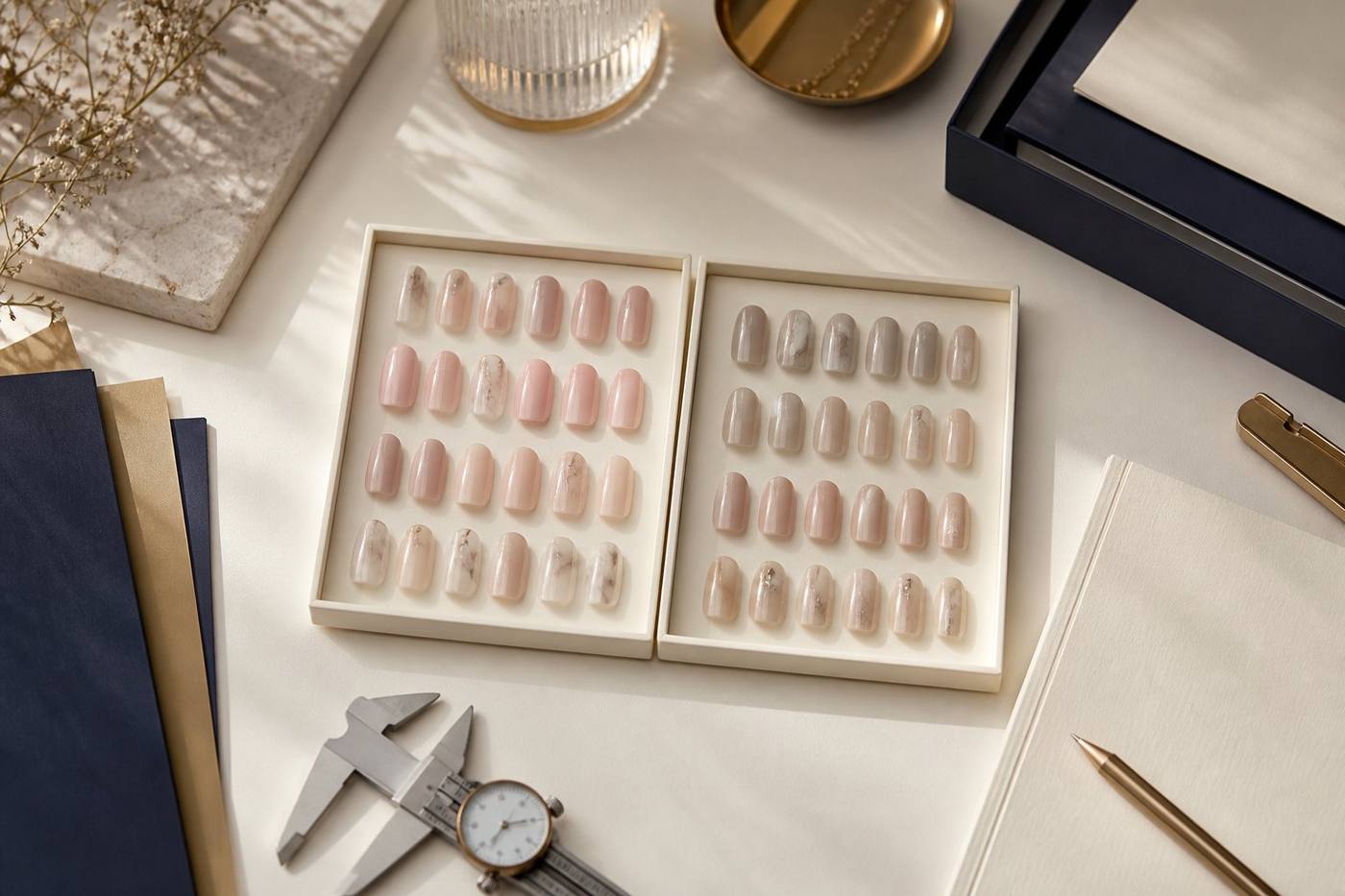
Material labels do not decide a product on their own. A useful comparison examines the actual sampled tip, its profile, finish, set configuration and the claims a brand can support.
Direct answer
The short version
Neither material label is universally better. Compare the actual sampled tips for the same use case, document fit and finish observations, and confirm what evidence supports the product language you plan to use.
Key facts
What to keep visible while comparing routes.
- Like-for-like sample
- Compare similar shape, length, finish and intended use—not one display tip against another.
- Material wording
- Use the supplier's description for the sampled tip and keep it consistent in the brief and product copy.
- Customer claims
- Only make claims supported for the exact product and target market.
Step 01
Ask what the supplier means by the material label
Terms such as soft gel and ABS can be used broadly in product listings. Request the supplier's material description for the actual tip being sampled, then keep that language consistent in your internal brief and product communication.
Step 02
Compare the same shape and use case
A long decorated tip and a short everyday tip are not a fair material comparison. Where possible, compare similar shapes, lengths and finishes so the discussion is about the options relevant to your intended set.
Step 03
Review fit, edge quality and finish
During sample review, note how the tip profile sits, how the cuticle and sidewall area is finished, whether decoration is secure and how the surface presents after handling. Record observations rather than relying on broad performance claims.
Step 04
Ask what evidence exists
Request the material information and product-specific documentation available for the sampled route. A broad factory statement or an unrelated certificate should not be reused as support for a different tip, finish or market.
Step 05
Choose claims carefully
Avoid making universal durability, safety or damage-free claims unless you have appropriate evidence for the exact product and market. Clear application and removal instructions are often more helpful than a stronger headline.
Decision summary
Three points to carry into the next supplier conversation.
- 01
Use the material label to start a supplier question, not to finish a product claim.
- 02
Compare actual samples on the same shape, finish and customer use case.
- 03
Keep material and performance language conditional until the exact supplier route and market evidence are confirmed.
This guide is not a material certification or safety assessment. Obtain appropriate product, legal and compliance advice for the markets where you sell.
Frequently asked questions
Questions to resolve before the next sample.
Is soft gel always better than ABS?
No. The label alone does not establish a universal outcome. Compare the actual sample, its fit, finish, decoration and available evidence for the intended product.
What should a supplier provide for a material comparison?
Ask for the description of the sampled tip, the comparable sample scope, finish and decoration details, and any product-specific information relevant to the target market.