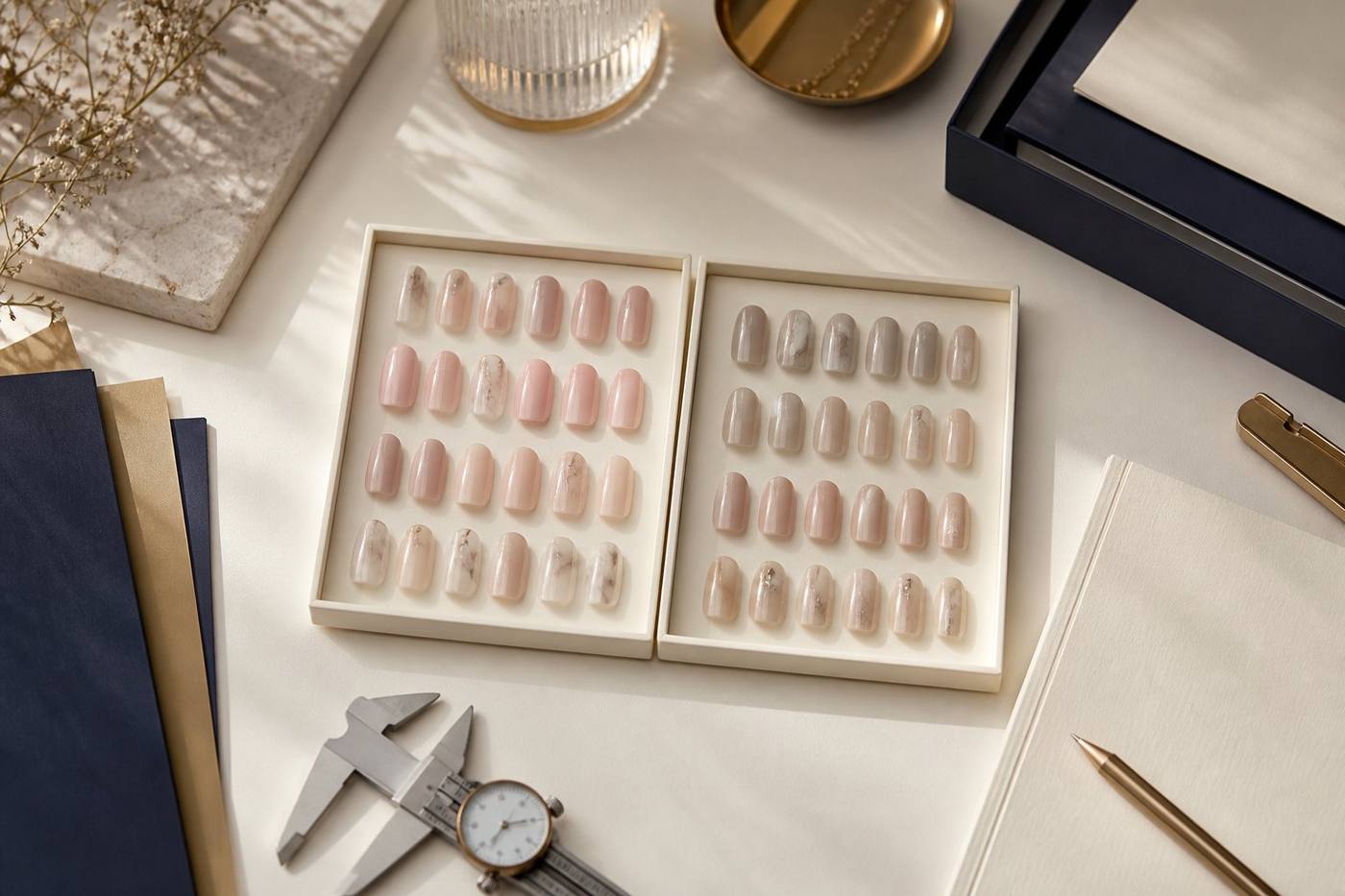
Finding suppliers is straightforward. Choosing the supplier that can reliably deliver the right product, packaging and communication is the part that protects a new collection.
01
Look for evidence, not just attractive listings
A supplier catalogue can show design range, but it does not show how a current product looks in hand or how the team handles questions. Ask for current photos and short videos of the closest available product. Request close-ups of the tip edge, surface finish, decorations, tray or set configuration. A useful reply answers the question you asked, rather than sending a large folder without context.
02
Check whether the product matches your intended market
A style that works as a low-cost trend item may not suit a premium boutique brand. Clarify the expected nail finish, decoration level, package feel and customer price position before comparing options. You are not choosing the supplier with the most styles; you are choosing the one whose product route can support the collection you want to sell.
03
Ask how customisation changes the order
A supplier may offer a stock nail set but need different quantities or lead times for a colour adjustment, logo, box or fully custom design. Separate the questions: what is already available, what can be adjusted, what requires a new sample, and what must be ordered at a higher quantity? This avoids the common situation where an initial quote looks workable but changes after packaging or design details are introduced.
04
Use the sample stage to test communication as well as the product
When a sample is being developed, you can see how a supplier handles artwork, clarification, feedback and revisions. Do they confirm key points? Do they highlight limitations early? Do they show actual progress? A reliable process at sample stage cannot guarantee a perfect order, but it gives a more realistic picture than a quick quotation alone.
05
Make comparisons visible
Use a single sheet for each option: product direction, available evidence, MOQ, sample cost, production estimate, packaging capability, unanswered questions and overall fit. This keeps the final decision anchored in the product and process, not only the headline price. It also makes it easier to explain why one supplier was chosen over another.
A sourcing decision does not need to be rushed. The right next step can be a short list, a targeted question set or one well-planned sample—not a production commitment.
Frequently asked questions
Questions worth resolving before you commit to a supplier.
What should I ask a press-on nail supplier for before comparing quotes?
Ask for current photos and short videos of the closest available product, including close-ups of the tip edge, surface finish, decorations and set configuration. A useful reply answers that specific evidence rather than sending an unrelated catalogue.
How does customisation affect a press-on nail quote?
A stock nail set may need different quantities or lead times once you add a colour adjustment, logo, custom box or fully custom design, so separate what is already available, what can be adjusted, what needs a new sample, and what requires a higher minimum quantity.
What does the sample stage reveal beyond the product itself?
Sampling shows how a supplier handles artwork, clarification, feedback and revisions, whether they confirm key points, flag limitations early and show real progress, which is a more realistic signal than a quick quotation alone.