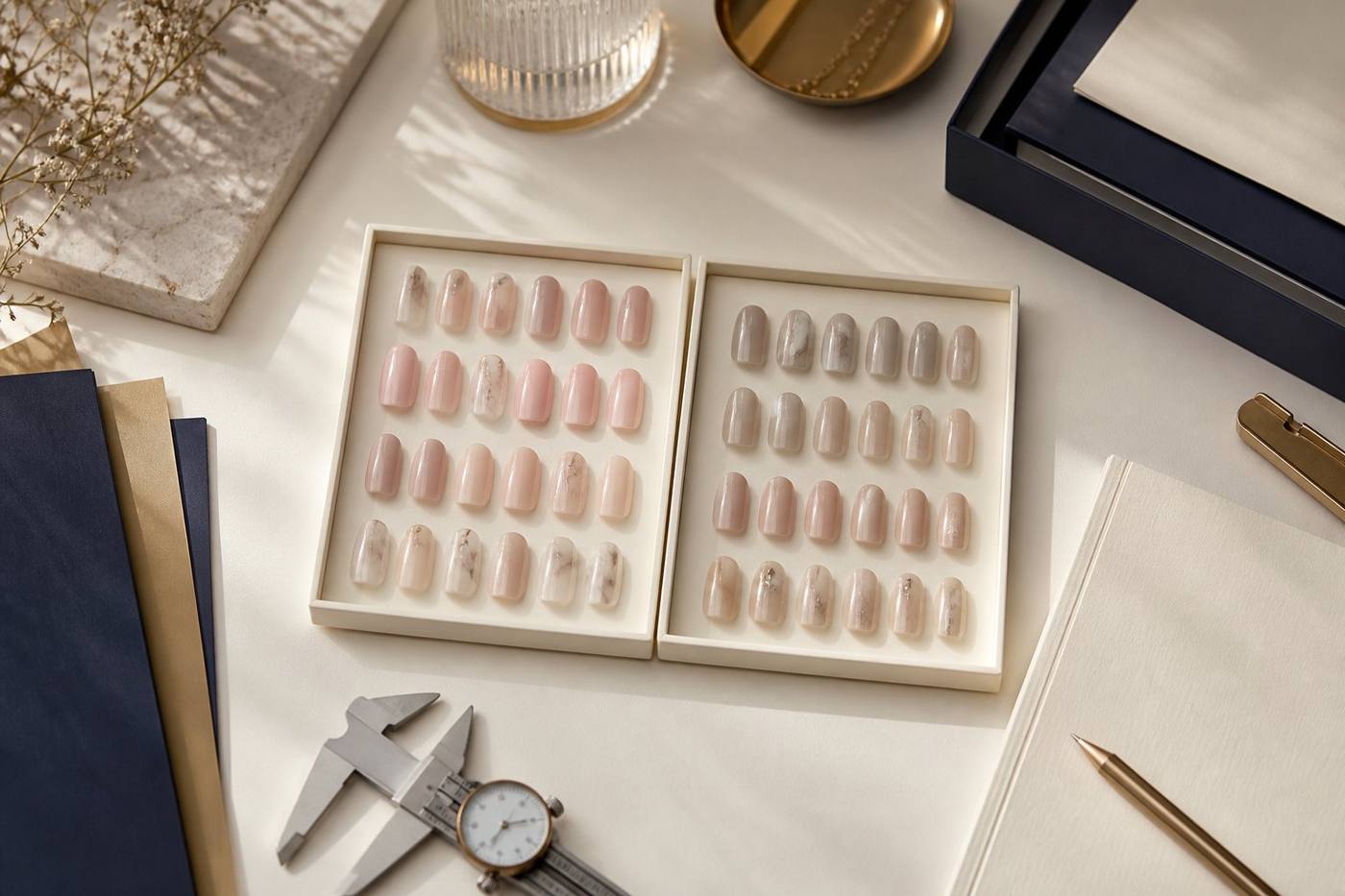
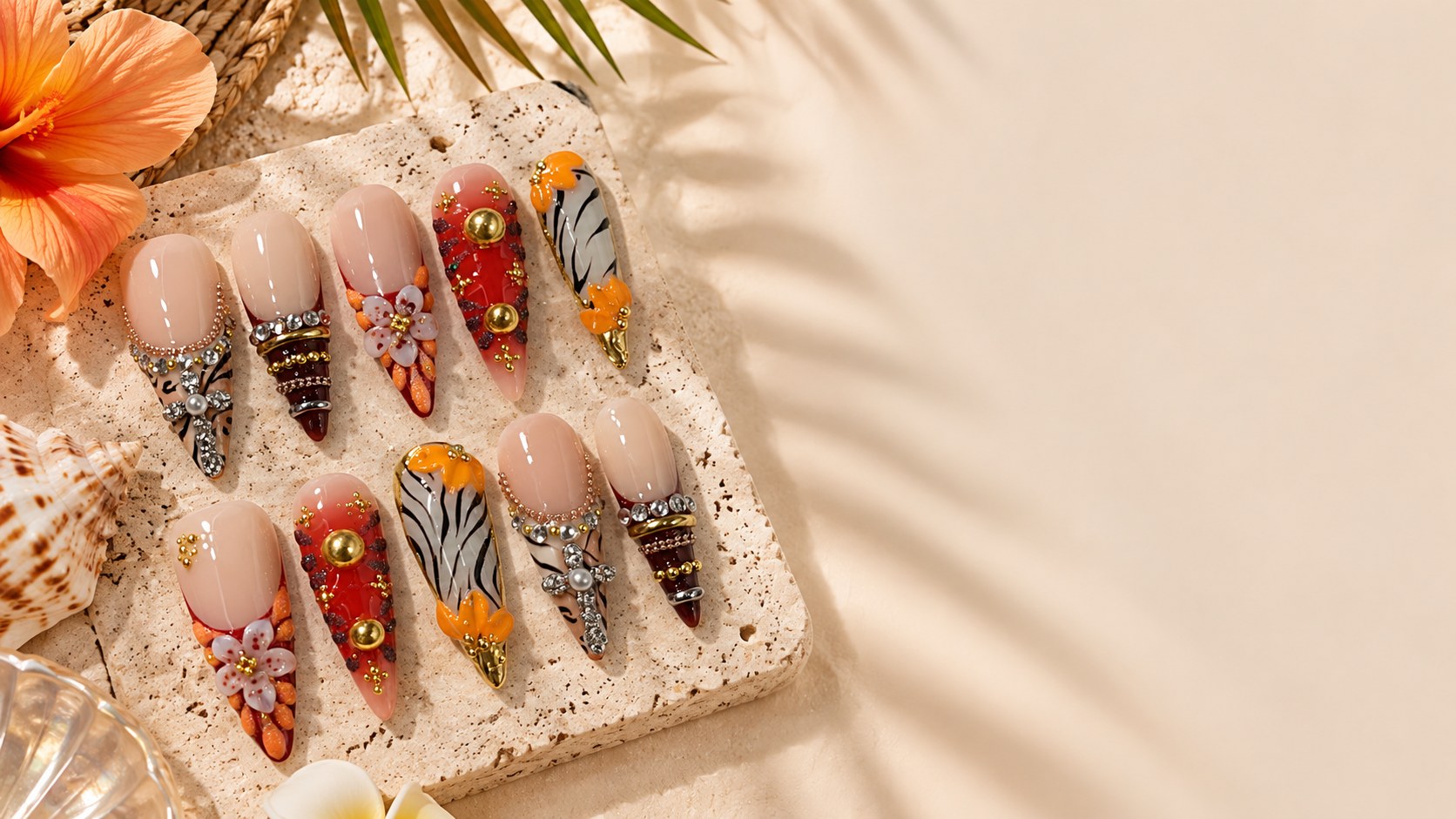
A trend can spark a collection, but it does not replace the practical product decisions a supplier needs before quoting or sampling.
01
Treat trend names as a starting point, not a full specification
Terms such as cat-eye, chrome, aura and French tip help describe a visual direction, but they do not tell a supplier exactly what to make. A usable brief also identifies the nail shape, length, colour family, finish, decoration level, set quantity and target price position. Reference images are helpful when they are annotated with the details that matter most.
02
Cat-eye and velvet effects
Magnetic cat-eye effects can read very differently depending on the base colour, magnetic line placement, lighting and top-coat finish. Ask for current close-up videos rather than relying on a flat product image. For samples, specify whether the effect should look like a narrow stripe, a diffused velvet glow or a more dramatic diagonal line.
03
Chrome and metallic finishes
Chrome can mean a mirror surface, a pearl sheen, a glazed finish or metallic detailing over a different base. Include a reference for the intended level of reflectivity and ask how the finish will be protected during packing and transit. A sample is the right point to review whether the surface looks consistent across a complete set.
04
French tips and more wearable core styles
French tip press-ons remain useful for a core collection because the style can be refreshed through colour, tip width, shape and finish. Define the relationship between the base and tip colour, whether the line should be crisp or softened, and how the set should be balanced across sizes. This makes it easier to compare a minimal direction with a more seasonal one.
05
Aura, Y2K and decorated directions
Aura gradients, charms, stones and 3D elements need practical decisions around placement, attachment and packaging clearance. A highly decorated reference can be a useful creative direction, but a supplier should confirm what is feasible for the intended quantity and how it changes sampling, lead time and unit cost. Do not assume an attractive listing represents a repeatable production plan.
06
Build a trend brief that suppliers can answer
For each direction, prepare one page with the reference image, product name, shape, length, finish, set contents, packaging need, estimated quantity and open questions. Ask each potential supplier to respond against the same brief. The resulting comparison is more useful than collecting unrelated catalogues or headline prices.
Trend terms are useful discovery language. The source of a good sample is a clear brief, realistic questions and evidence from the supplier—not a promise attached to a trend name.
Frequently asked questions
Questions worth resolving before a trend becomes a brief.
Is a trend name like cat-eye or chrome enough to brief a supplier?
No. Trend terms describe a visual direction but not a full specification. A usable brief also states the nail shape, length, colour family, finish, decoration level, set quantity and target price position.
How should I evaluate a cat-eye or chrome finish before ordering?
Ask for current close-up videos rather than relying on a flat product image, since magnetic cat-eye and chrome effects can look very different depending on base colour, line placement, lighting and top-coat finish.
What should a trend-based sourcing brief include?
One page per direction with the reference image, product name, shape, length, finish, set contents, packaging need, estimated quantity and open questions, sent to every candidate supplier so the resulting comparison is meaningful.